As Easter approaches, Christians around the world prepare to remember the most sacred events of the faith—the Crucifixion of Jesus Christ and His Resurrection.
We know these moments well.
The Cross represents sacrifice, love, and redemption.
The empty tomb proclaims victory, hope, and new life.
But between these two defining events lies a quieter span of time—three days that Scripture acknowledges but rarely explains. Jesus had died. The Resurrection had not yet come. And for many believers, those days pass unnoticed.
Yet the three days still matter.
The Bible tells us Jesus was buried. It tells us the disciples waited in grief and confusion. It hints—briefly—at a continuing mission, but does not linger on details. That silence has shaped Christian thought for centuries. Some traditions embraced mystery. Others sought interpretation. Still others believed revelation continued where Scripture paused.
This space between the Cross and the Tomb invites us to slow down.
Holy Saturday—the day of waiting—is often the most overlooked day of Holy Week. It is a day without miracles, without answers, without resolution. And yet, it may be the day that most closely mirrors our own experience of faith. We wait. We trust. We hope—often without seeing.
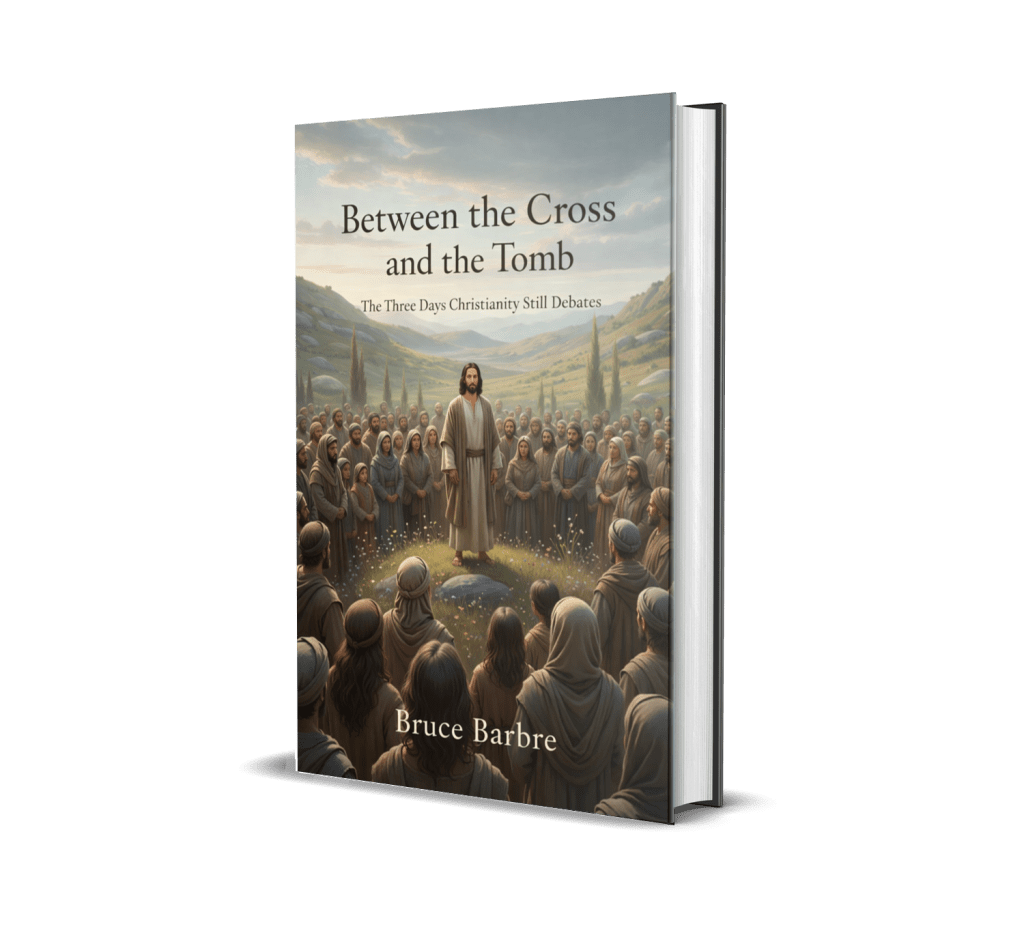
Between the Cross and the Tomb was written as a prelude to Easter, not to challenge belief, but to deepen remembrance. It explores what Scripture says about those three days, what it leaves unsaid, and why Christians continue to wrestle with their meaning. The goal is not argument, but understanding—and reverence for the Savior’s mission beyond what is easily explained.
Easter is not diminished by reflection. It is strengthened by it.
When we pause in the stillness between sorrow and joy, we better understand the power of the Resurrection. We see that God’s work does not always announce itself with spectacle. Sometimes it unfolds quietly, faithfully, beyond our view.
As you prepare for Easter this year, consider spending time not only at the Cross and the empty tomb, but also in the waiting between them. Scripture invites us there. History points us there. And often, it is in that stillness that the deepest understanding begins.
The Resurrection is coming.
But first, there is the silence.
And the silence still speaks.
 The Flameborne Path
Leave a comment