
Some books are written to explain something.
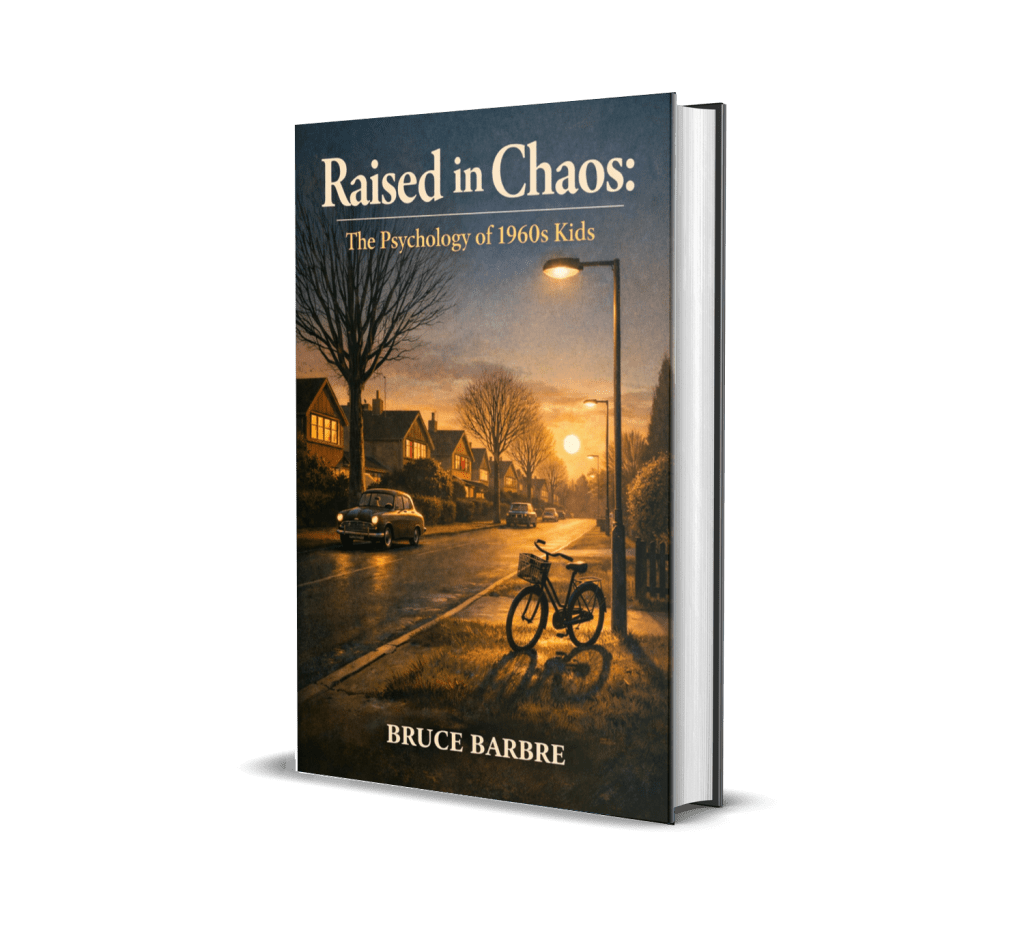
This one was written to remember it.
If you grew up in the 1960s, you already know the feeling. Childhood unfolded without much commentary. Freedom and responsibility arrived early. Wonder and fear existed side by side, and no one paused to label it as unusual.
It was just life.
You walked to school. You rode bikes without helmets. You ran errands. You played until the light changed and someone called you home. At the same time, nuclear drills were practiced calmly, assassinations interrupted regular programming, war footage appeared on the evening news, and the world felt both promising and fragile.
And somehow, we adjusted.
Over time, I began to notice something. Many people who grew up during that era seem to handle uncertainty differently. Calm under pressure. Skeptical, but not cynical. Comfortable with not having all the answers. Capable of “handling it” without narrating every step.
This book, Raised in Chaos: The Psychology of 1960s Kids, explores how that mindset formed—not as theory or politics, but as lived experience.
It’s not a complaint about modern kids.
It’s not an argument about how things should be.
It’s a record of how things were—and what they quietly shaped.
Why This Story Matters Now
As generations change, lived experience fades. What remains are simplified narratives that miss the texture of everyday life.
This book exists to preserve that texture.
Not to glorify hardship.
Not to recreate fear.
But to understand how responsibility, freedom, limited media, boredom, and real consequences shaped a particular kind of resilience.
Some lessons were learned without anyone realizing they were lessons at all.
They deserve to be remembered.
An Invitation to Share
If you grew up in the 1960s, your memories matter too.
The moments that stayed with you.
The responsibilities you carried early.
The freedoms you were trusted with.
The times you realized adults didn’t have all the answers—and kept going anyway.
Comments are welcome.
I’m reading them carefully, and selected reflections may be included (with permission) in a future paperback edition of the book. Not as analysis—but as voices. As lived history, preserved in the words of those who were there.
This story doesn’t belong to one author.
It belongs to a generation.
— Bruce Barbre
 The Flameborne Path
Leave a comment