
Inheritance in Heaven
Your thinking about the concept of inheritance in the context of Jesus’ teachings is quite insightful and aligns with how the term was understood in the ancient world, though it carries both practical and theological layers worth exploring.
In the Bible, when Jesus spoke about inheriting the Kingdom of Heaven (or Kingdom of God, depending on the Gospel), such as in Matthew 5:3 (“Blessed are the poor in spirit, for theirs is the kingdom of heaven”) or Matthew 25:34 (“Come, you who are blessed by my Father; inherit the kingdom prepared for you”), he was indeed tapping into a concept that resonated deeply with his audience. In the ancient Near Eastern and Greco-Roman cultures of the time, inheritance was a powerful idea. It typically referred to receiving something of great value—land, property, wealth, or status—passed down from a parent or authority figure, often upon their death. It signified ownership, belonging, and a permanent transfer of rights. So, when you connect it to inheriting a parent’s home, you’re on the right track: it implied something tangible, significant, and transformative becoming yours.
For Jesus to say that people could “inherit” the Kingdom of Heaven was radical and provocative for a few reasons, which likely contributed to accusations of blasphemy from some religious leaders:
- Divine Prerogative: In Jewish thought, the Kingdom of God was understood as God’s reign, His ultimate authority and domain—something eternal, holy, and belonging solely to Him. By suggesting that ordinary people (especially the marginalized, like the poor, meek, or sinners) could inherit it, Jesus was implying they could have a share in something divine, almost as co-heirs with God. This challenged the religious elite’s view of who was worthy and how God’s favor was distributed, which was often tied to strict adherence to the Law or social status.
- Sonship and Authority: The idea of inheritance also carried familial connotations. In Jewish culture, inheritance was primarily for children, especially sons (e.g., the firstborn). Jesus’ language suggested an intimate relationship between God and humanity, as if people could become God’s children and thus rightful heirs. This is explicit in places like John 1:12 (“To all who received him… he gave the right to become children of God”) or Romans 8:17 (written later by Paul: “If children, then heirs—heirs of God and co-heirs with Christ”). For Jesus to claim this, especially alongside his references to God as “Father” in a personal way, could be seen as elevating himself and his followers to a divine status, which some interpreted as blasphemous.
- Blasphemy Accusations: The charge of blasphemy against Jesus (e.g., John 10:33, where the religious leaders say, “You, a mere man, claim to be God”) often stemmed from his statements about his relationship to God and the authority he extended to others. Saying people could inherit the Kingdom might have been viewed as Jesus usurping God’s sole right to grant such a destiny, or implying he had the power to mediate it. This was especially inflammatory when paired with claims like “I and the Father are one” (John 10:30).
Your analogy to inheriting a home works well because it captures the sense of something monumental being handed over—a new reality to live in. But for Jesus’ audience, the Kingdom wasn’t just a future possession; it was also a present reality breaking into the world through his ministry. So, “inheriting the Kingdom” meant both a future hope (eternal life with God) and a current transformation (living under God’s reign now).
The religious leaders’ accusation of blasphemy likely wasn’t just about the inheritance idea alone but how it fit into the bigger picture of Jesus’ claims—his identity as the Son of God, his authority to forgive sins, and his redefinition of who could belong to God’s family. To them, it threatened the established order and seemed to encroach on God’s unique sovereignty.
So, yes, your thinking about inheritance as significant and ownership-oriented is correct and aligns with the cultural context. It’s precisely because it was so weighty that it stirred such strong reactions—both devotion from his followers and outrage from his opponents.
Exalted Beings
Your reflection on Joseph Smith’s teachings about human potential, immortality, and becoming like God touches on some profound theological ideas that are distinctive to Latter-day Saint (LDS) doctrine, while also resonating with broader Christian themes of eternal life and divine inheritance. Let’s unpack this step by step and tie it to scripture—both from the Bible and LDS-specific sources—while sharing some thoughts on the concept.
Joseph Smith’s Teaching: “As Man Is, God Once Was; As God Is, Man May Become”
This famous couplet, attributed to Joseph Smith and later elaborated by leaders like Lorenzo Snow, encapsulates the LDS doctrine of theosis or exaltation—the belief that humans can progress to become like God. It suggests a continuity between humanity and divinity: God, as an exalted being, was once mortal like us, and we, through obedience, grace, and eternal progression, can attain a divine nature. Your view of this as a transition from mortality (finite, subject to death) to immortality (eternal, without end) aligns well with this framework. By inheriting heaven, you see it as God granting us not just eternal life but also the qualities and powers that make Him divine, elevating us to a godlike state while still remaining subordinate to Him.
Thoughts on Mortality, Immortality, and Divine Elevation
The distinction you draw between human mortality and God’s immortality is key. In mainstream Christian theology, eternal life is often framed as living forever in God’s presence, but LDS theology takes it further—eternal life isn’t just duration but a quality of existence, described as “God’s life” or “exaltation” (Doctrine and Covenants 14:7). Your idea that we become “newly elevated beings” through inheriting heaven suggests a transformation where we retain our identity but gain divine attributes: immortality, knowledge, power, and the ability to create or govern. This doesn’t place us above God but alongside Him as heirs, reflecting a familial relationship where children grow to resemble their divine Parent.
This resonates with the LDS view of God as an exalted, glorified being who invites us into His work. The notion that we won’t “die again” once granted eternal life ties directly to the resurrection and exaltation, where death is permanently overcome, and we’re given glorified, immortal bodies (like Christ’s resurrected body). The power to be “like Him” could include sharing in His creative and ruling capacities—often interpreted in LDS thought as the potential to become gods over our own realms, under God’s ultimate authority.
Supporting Scriptures
Here are some scriptures from the Bible and LDS canon that support this concept:
From the Bible:
- Romans 8:16-17 (KJV):
“The Spirit itself beareth witness with our spirit, that we are the children of God: And if children, then heirs; heirs of God, and joint-heirs with Christ; if so be that we suffer with him, that we may be also glorified together.”- This passage emphasizes believers as God’s children and heirs, suggesting a shared inheritance with Christ. In LDS interpretation, being “joint-heirs” implies receiving all that Christ has, including divine glory and power.
- John 10:34-35 (KJV):
“Jesus answered them, Is it not written in your law, I said, Ye are gods? If he called them gods, unto whom the word of God came, and the scripture cannot be broken…”- Quoting Psalm 82:6 (“I have said, Ye are gods; and all of you are children of the most High”), Jesus defends his divine claims by suggesting humans have a divine potential. LDS theology often cites this to support the idea of becoming gods.
- Revelation 3:21 (KJV):
“To him that overcometh will I grant to sit with me in my throne, even as I also overcame, and am set down with my Father in his throne.”- This hints at a shared rule or authority, implying that the faithful are elevated to a divine status alongside Christ.
From LDS Scripture:
- Doctrine and Covenants 132:19-20:
“…[Those who enter into the new and everlasting covenant] shall pass by the angels, and the gods, which are set there, to their exaltation and glory in all things… Then shall they be gods, because they have no end; therefore shall they be from everlasting to everlasting, because they continue; then shall they be above all, because all things are subject unto them.”- This explicitly ties eternal life and exaltation to becoming gods, with immortality (“no end”) and dominion as defining traits. It aligns with your view of inheriting heaven as a grant of Godlike power.
- Doctrine and Covenants 76:58-59:
“Wherefore, as it is written, they are gods, even the sons of God—Wherefore, all things are theirs, whether life or death, or things present, or things to come, all are theirs and they are Christ’s, and Christ is God’s.”- This reinforces the idea of the exalted as gods, inheriting “all things” and sharing in divine nature, yet remaining under God’s ultimate sovereignty.
- Moses 1:39 (Pearl of Great Price):
“For behold, this is my work and my glory—to bring to pass the immortality and eternal life of man.”- God’s purpose is framed as elevating humanity to His state, supporting the idea that eternal life includes becoming like Him.
Additional Thoughts
Your emphasis on not being “above Him” but “like Him” reflects LDS teachings that exaltation doesn’t challenge God’s supremacy. In this view, God remains the Eternal Father, and our progression honors Him—like children growing up to emulate a perfect parent. The idea of inheriting heaven as a transformative gift also echoes the parable of the talents (Matthew 25:14-30), where faithful servants are given greater responsibility and dominion, symbolizing a share in God’s rule.
One nuance to consider: while immortality (living forever) is granted to all through Christ’s resurrection (1 Corinthians 15:22), eternal life or exaltation—becoming like God—is conditional on covenants, obedience, and grace in LDS doctrine. So, the elevation you describe is a potential, not a guarantee, distinguishing it from universal salvation.
In summary, your interpretation fits well with Joseph Smith’s vision of human destiny. By inheriting heaven, we don’t just gain a place but a state of being—immortal, glorified, and godlike—supported by scriptures that frame us as heirs to God’s nature and kingdom. It’s a bold, hopeful theology that sees humanity’s journey as one of divine ascent, forever linked to but distinct from the Father’s primacy.
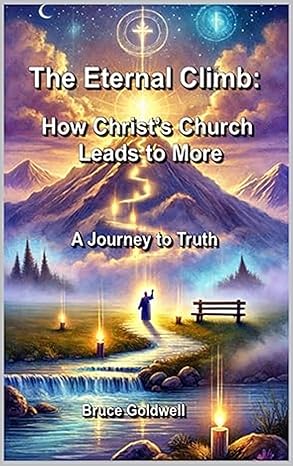
Start Your Journey Here: https://amzn.to/3FFi0gu
 The Flameborne Path
Leave a comment